Practical room note
Create a Shared-Bedroom Closet Handoff
Separate clean returns, rewear items, laundry, repairs, and donations so clothes stop collecting on chairs and the floor.
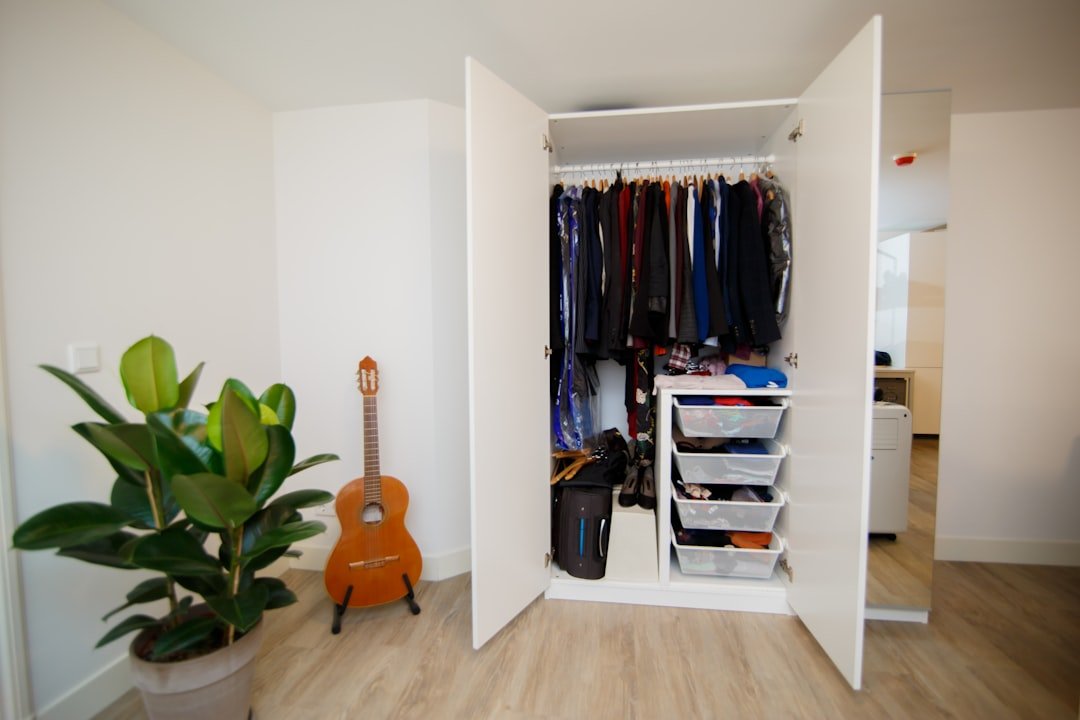
Working brief
Keep these three things in view.
- 01
Start with the repeat problem: a shared bedroom has storage for finished clean clothes but no agreed place for clothing between wearing, washing, repairing, and putting away.
- 02
Measure closet opening, hanging width, hamper capacity, hook strength, chair footprint, door clearance, and each person's comfortable reach before adding storage or furniture.
- 03
Test the smallest workable version through several ordinary uses before buying more.
This is general home-living information. Follow product labels, manuals, lease rules, local requirements, and qualified advice for electrical, plumbing, structural, gas, pest, mold, ladder, medicine, or installation work.
A useful room reset begins with an ordinary point of friction, not a picture of a finished room. Here, the repeat problem is that a shared bedroom has storage for finished clean clothes but no agreed place for clothing between wearing, washing, repairing, and putting away. Naming that pattern keeps the project attached to real mornings, evenings, meals, cleaning sessions, and handoffs instead of turning it into a broad makeover.
The practical goal is to give each transition a small visible destination that respects both people's habits and keeps the room route clear. The plan below starts with observation, protects the physical route through the room, builds one small working version, and adds a maintenance cue only after the setup has proved useful.
Start with the friction, not the container
Sort one week of clothing by actual next action: clean return, rewear, wash, delicate care, repair, return, donate, or decide later. Notice where each group currently stalls.
Keep the observation period ordinary. Do not tidy first or choose a day when the room is being used differently from normal. The objects that repeatedly stall, migrate, or block a surface are more useful evidence than a complete inventory of everything the household owns.
Write the friction in one sentence and add who experiences it, when it appears, and what happens next. A clear sentence makes it easier to reject an attractive organizer or piece of furniture that does not solve the actual handoff.
- Photograph the starting point from the normal approach
- Name the time and people involved
- Separate daily objects from backups and undecided items
- Protect anything private, fragile, hazardous, or time-sensitive
Measure the route before changing the room
Measure closet opening, hanging width, hamper capacity, hook strength, chair footprint, door clearance, and each person's comfortable reach. Record the numbers beside the starting photograph so the plan stays tied to the real room rather than a product listing or an imagined clear space.
Measure with doors, drawers, chairs, appliances, and people in the positions used during the routine. A shelf can fit a wall and still fail because a door cannot open, a person cannot pass, or the contents cannot be reached without moving something else first.
Mark the no-storage space as deliberately as the storage space. Walking routes, ventilation, controls, outlets, shutoffs, windows, heating equipment, and cleaning access need room to keep doing their jobs.
- The active route remains clear
- Doors and drawers complete their full movement
- Frequently used items are within a safe comfortable reach
- Heavy, wet, hot, sharp, private, or electrical items have suitable locations
Build a temporary first version
Use a tray, open box, spare basket, paper label, taped outline, or furniture already in the home to test the boundary. The first version should be easy to move or undo because its purpose is to reveal whether the location and sequence work.
The setup is successful when it helps the household give each transition a small visible destination that respects both people's habits and keeps the room route clear. Appearance can be refined later, but the temporary version must first survive rushed use, incomplete handoffs, cleaning, and the moment when an item needs to return.
Keep capacity intentionally small. Extra room is often filled by unrelated objects before the routine is understood. A visible limit shows whether the category is too broad, the location is wrong, or the household needs a separate exit path for repairs, donations, recycling, or records.
Before buying a permanent piece, write down what the temporary boundary taught you about size, access, visibility, and return behavior. Compare that evidence with the proposed item's usable interior dimensions, opening movement, cleaning needs, installation requirements, and return terms. A product earns its place only when it improves the proven route without taking away necessary floor, wall, counter, ventilation, or maintenance space.
Run the task in a clear order
Use the same short order for several ordinary cycles. A stable order reduces decisions and exposes the exact step where an object, person, surface, or tool still has no workable handoff.
Do not add a second system when one step fails. Adjust the location, label, quantity, or timing of that step, then run the whole route again. Small corrections produce better evidence than replacing every piece at once.
When two people use the room differently, preserve the shared outcome but allow different personal cues. A household system should make the result predictable without requiring everyone to copy the same movement or visual preference.
- Return fully clean clothing first
- Limit rewear space to one small boundary
- Move laundry directly to its correct stream
- Review repair and exit items weekly
Test it through an ordinary week
Leave the temporary version in place long enough to encounter a busy day, a slower day, a cleaning cycle, and at least one return of items to the room. Note what still lands outside the boundary and whether that object truly belongs to the category.
Check whether the setup saves a movement or simply hides the same delay. Useful storage makes an item easier to find, use, return, clean, or review. If a lid, deep stack, distant shelf, or over-specific label adds a new obstacle, simplify it before making the setup permanent.
Ask every regular user one concrete question: what was easier, and what still had no obvious next place? That answer is more actionable than asking whether the room looks better.
Repeat the starting photograph from the same position and compare function before appearance. Look for a clearer route, fewer delayed objects, faster returns, and less work at the next reset. If the room only looks quieter because unresolved items moved into a deeper pile, reopen the category and give those items an honest next action rather than purchasing a larger place to postpone the decision.
Add the smallest maintenance cue
Reset the handoff surfaces before laundry day and keep each person's temporary zone finite rather than mixing both wardrobes into one undecided pile.
Attach maintenance to an event that already happens: leaving the room, starting laundry, planning groceries, taking out recycling, or completing the weekly reset. A separate reminder is less dependable than a cue already present in the routine.
The reset should return the zone to a usable baseline, not perfect it. If maintenance repeatedly needs a long sorting session, reduce the category, move the boundary closer to the point of use, or create a clearer exit route for items that no longer belong.
Keep one dated note of the final adjustment and review it after the room has passed through another busy week. That small record prevents the same unsuccessful layout from returning during the next seasonal reset.
Know where the home project stops
Keep floors and exits clear, mount hooks according to load and wall guidance, store irons or steamers safely, and follow garment care labels.
Product labels, appliance manuals, lease or building rules, current official guidance, and qualified local advice take priority over a general room routine. Pause when materials, loads, moisture, wiring, gas, plumbing, mold, pests, medicine, food safety, mounting, or structural conditions are uncertain.
A calm home system is allowed to remain simple. If the temporary version solves the repeat friction and stays safe to use, there is no requirement to turn it into built-in storage, matching containers, new furniture, or a larger renovation.
Continue through the room
Related notes for the next useful move.
Rest
Reset the Bedroom Clothing Chair Without Hiding the Problem
A simple route for worn-again clothes, laundry, repairs, and closet returns when one chair has become the room's unofficial wardrobe.
Clean
A Laundry Flow Reset for Clothes That Pile Up
A laundry flow reset for hampers, sorting, folding, missing socks, linens, and the point where clean clothes stop moving.

Store
A Closet Zone Map for Clothes You Actually Wear
A closet zone map for daily clothes, occasional pieces, shoes, laundry returns, out-of-season items, and the clothes you keep skipping.